

Domino is a familiar tile game in which players arrange pieces into a connected sequence according to the number of dots displayed on each tile. Today, it is also available on online platforms, offering competitive formats and real-money betting options. This guide walks you through the essential steps to help you become familiar with the game at phsky99.ph.
Understanding the tiles and symbols in Domino
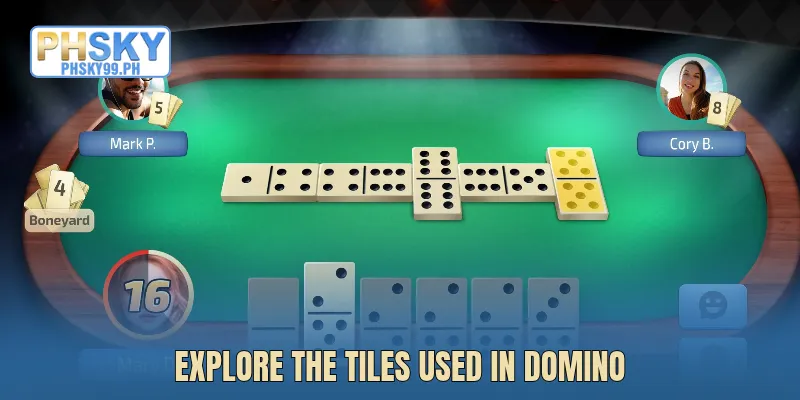
To play Domino correctly, beginners should first learn how each tile is structured and identify the different combinations in a standard set. The most common version is called Double-Six, which contains 28 unique tiles. Each rectangular tile is divided into two halves, with each half displaying between zero and six dots.
| Component | Characteristics | Meaning during gameplay |
| 0-0 tile | Neither half contains any dots | Can be used when the rules allow matching an open zero end |
| Double tiles | Both halves display the same number of dots | Commonly known as doubles |
| Regular tiles | Each half displays a different number of dots | Used to connect matching numbers at the ends of the sequence |
| Open ends | The two outermost positions of the tile chain | Determine which tiles can be played next |
| Total points | The total number of dots on a tile or calculated according to table rules | Used to determine results in certain variations |
For example, a 3-5 tile can connect to either an open end displaying 3 or one displaying 5. If one end of the sequence currently shows 5, you must select a tile with at least one half containing five dots to continue your turn.
Double tiles, such as 2-2 or 6-6, are often placed horizontally or displayed in a distinctive position to make them easier to recognize. However, their visual orientation does not change the number of dots or the value assigned to either half.
How to calculate scores in Domino
In several popular variations, the number of dots remaining on a player’s tiles is used to calculate their score when a round ends. This method is particularly relevant when a game reaches a blocked situation and no participant can make another valid move.
For example, suppose you still have three tiles: 1-2, 3-4, and 0-5. Their remaining points are calculated as follows:
- 1-2 tile: 3 points.
- 3-4 tile: 7 points.
- 0-5 tile: 5 points.
- Total: 15 points.
Depending on the variation, players may compare their remaining points to determine the winner. Some tables apply additional scoring conditions, so you should always check the rules displayed before joining a match.
How to play online Domino in 7 steps
The following instructions describe a common way to participate in an online match. The number of tiles dealt, the number of participants, and the playing order may differ depending on the variation offered by the gaming platform.
Step 1: Choose a suitable room
After logging in, find Domino in the game category and choose a room with suitable betting limits, player capacity, and game mode. Beginners should check the room details before joining to get familiar with the interface and rules.
Step 2: Confirm your betting amount
After choosing a PHSKY poker room, check your balance and required stake. Review the betting rules and table limits before confirming to ensure the amount fits your budget.
Step 3: Receive your Domino tiles
When the round starts, the system distributes tiles to each participant according to the established rules. In a Double-Six set, every tile has two halves, each displaying between zero and six dots.
You should examine all your tiles and organize them according to their numbers. For example, the 1-4, 1-6, and 1-2 tiles all contain the number 1. Therefore, they may become useful options whenever an open end of the chain displays that number.
Step 4: Determine who plays first
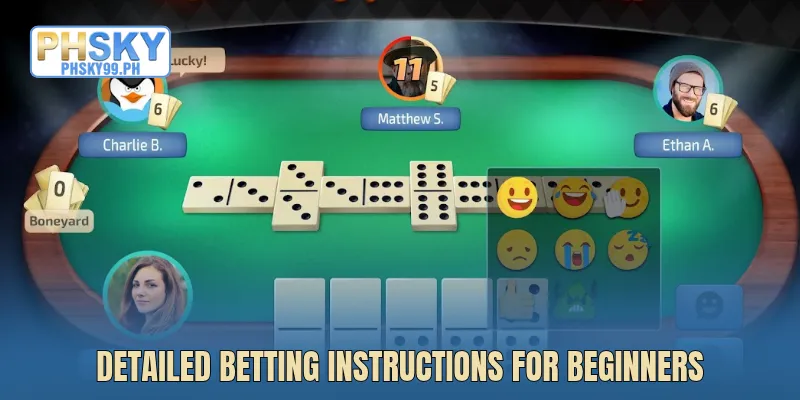
The first player is determined by the room’s rules, such as the highest double, dealing result, or random selection. When your turn comes, choose a highlighted valid tile and place it on the table, checking the open ends for your next move.
Step 5: Match tiles according to the open ends
This is the central action in Domino. A tile must have at least one half that matches one of the two currently open ends of the chain. Consider the following example:
- The two open ends of the current chain display 2 and 5.
- You hold the tiles 2-6, 5-3, and 1-4.
- Both 2-6 and 5-3 are valid moves.
- The 1-4 tile is invalid because neither of its numbers matches an open end.
After placing 2-6 at the end displaying 2, that end changes to 6. The next player can then connect a tile containing 6 or make a move at the opposite end of the chain.
Step 6: Handle situations when no matching tile is available
The way a player handles an unavailable move depends on the game variation:
- Draw: The player draws additional tiles from the remaining supply according to the table rules.
- Block Domino: The player skips their turn when they have no valid tile to place.
- Limited-draw variations: The system allows players to draw only a specified number of tiles before their turn passes to the next participant.
These rules can significantly affect the pace of a match. Therefore, understanding the specific drawing or skipping mechanism is essential before you start playing.
Step 7: Follow the result and receive rewards
A round usually ends when one player has placed all their tiles or when no valid moves remain under the rules of that variation. The system then determines the winner and updates the result.
If the table uses a scoring mechanism based on remaining dots, the points on each player’s unplayed tiles are added together. Other modes may apply different winning conditions, so the final result must follow the rules displayed at the table.
Tips for beginners learning Domino
The game requires more than simply finding tiles with matching numbers. Players also need to observe the chain, remember which pieces have already appeared, and choose an appropriate order for their moves. The following tips can help beginners approach each round more systematically.
Useful strategies for improving your Domino experience
- Organize tiles after receiving them: Group your pieces according to their numbers to identify which values appear most frequently and offer more matching possibilities.
- Observe both open ends: Before every turn, check both available ends rather than focusing only on the tile that was most recently placed.
- Track previously played tiles: Remembering the numbers and doubles already used can help you assess which combinations may still be available.
- Consider tiles with multiple uses: If a piece can connect in several situations, think carefully about when to play it so you do not lose useful options in later turns.
- Pay attention to remaining dots: In variations that calculate scores when the game is blocked, the total value of the tiles in your hand directly affects the result.
- Read the rules of each room: Do not automatically apply the Draw rules to Block Domino or assume that both variations use the same turn procedure.
- Manage your budget: Set a participation limit before playing and avoid using money reserved for essential expenses.
Conclusion
Domino is a tile-matching game that requires observation, memory, and the ability to choose suitable moves according to changing situations. Once you understand tile distribution, matching rules, scoring methods, and round-ending conditions, you can follow each match with greater confidence. Explore the rules of your preferred room and discover this engaging game at PHSKY when you are ready to participate.
